
E. coli Antibiotic Resistance Calendar 2026 | Oral Antibiotics & UTI Treatment
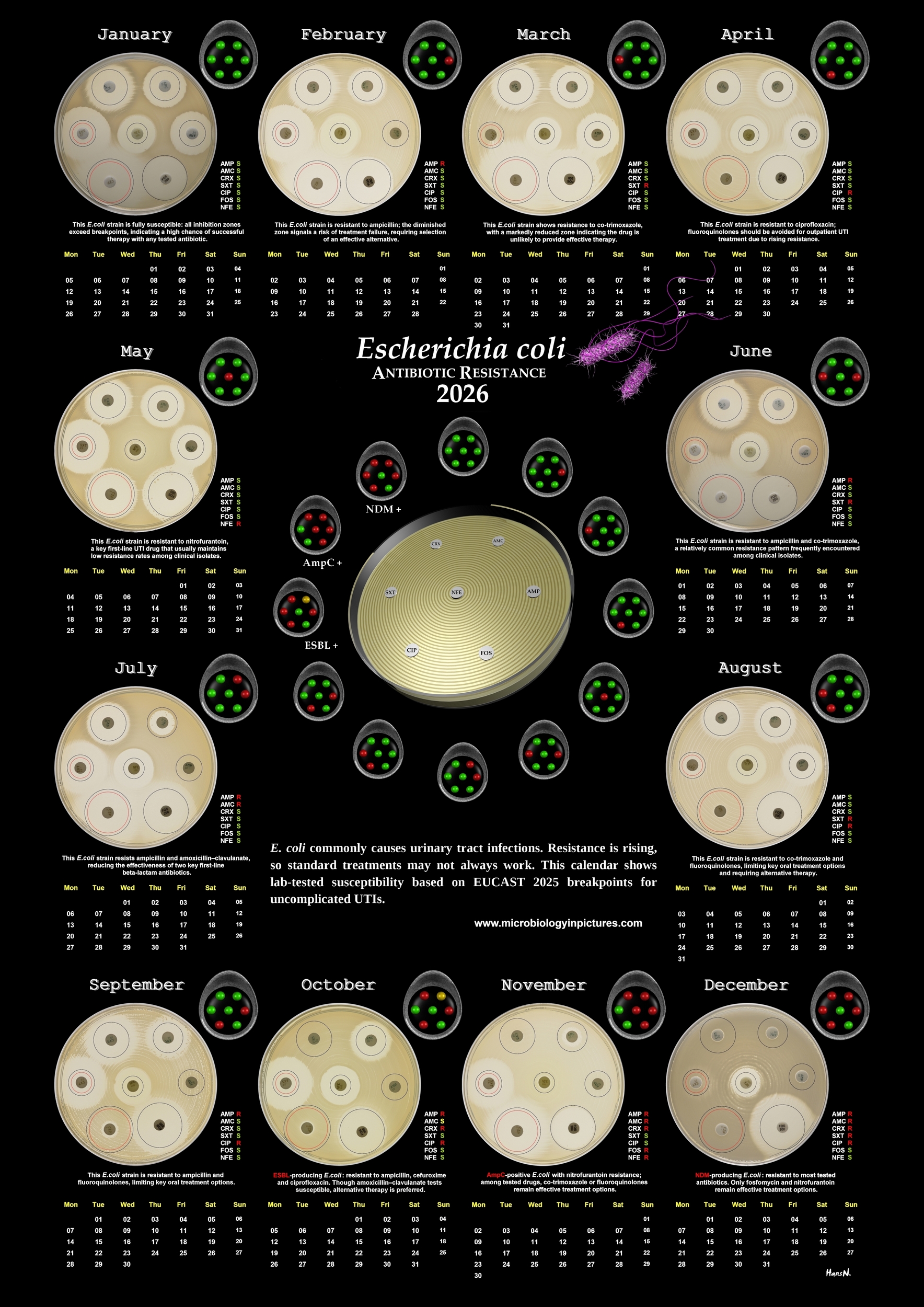
Escherichia coli remains the most common bacterial cause of urinary tract infections (UTIs) worldwide. Although many infections are mildand easily treatable, the growing problem of antibiotic resistance increasingly affects the success of oral therapy. Only a limited
number of oral antibiotics are available for UTI treatment, and their effectiveness varies widely among circulating E. coli strains.
The calendar visualizes antibiotic susceptibility testing of twelve real E. coli isolates, each showing a different resistance pattern. Such tests
demonstrate how strains may respond very differently to commonly used oral agents such as ampicillin, co-trimoxazole, ciprofloxacin,
nitrofurantoin, or oral cephalosporins. These patterns are interpreted according to the EUCAST 2025 Clinical Breakpoint Tables, which represent the current European standard for evaluating bacterial susceptibility.
In everyday practice, UTI therapy often begins empirically, meaning before laboratory results are available. While this approach is necessary to provide rapid treatment, it also carries the risk that the chosen medication will not match the organism’s actual resistance profile. Increasing rates of antimicrobial resistance mean that even commonly recommended oral antibiotics may occasionally fail.
By presenting these examples in a clear, visual format, this project aims to raise awareness of the challenges associated with treating UTIs caused by E. coli. Understanding antibiotic resistance, recognizing the limitations of empirical therapy, and appreciating the value of laboratory susceptibility testing are essential steps toward more effective and responsible antimicrobial use.